
Key takeaways
- Keepsake County reimagines the immersive sim in suburban America rather than fantastical settings, sending players to loot homes in the fictional state of Frikota.
- The game satirizes contemporary economic desperation and precarious employment, reflecting Forward Instinct's collective experience with financial instability and gig work.
- Warren Spector, creator of the original Thief, endorsed an early build of Keepsake County at DreamHack in Atlanta.
Keepsake County presents an unusual take on the immersive sim: instead of piloting a supernatural assassin through a clockwork city or recovering forbidden artifacts from ancient temples, you’re picking locks on suburban homes in the fictional state of Frikota to fund a desperate situation back home.
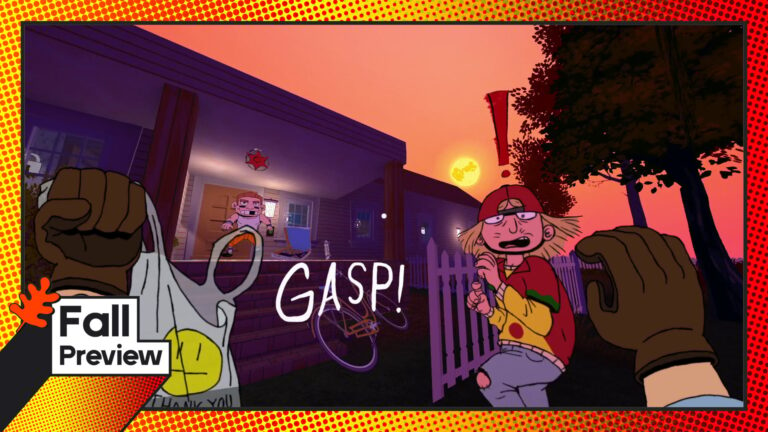
The game comes from Forward Instinct, the studio behind 2017’s Midnight Ultra. Its protagonist faces mounting catastrophe. A father sits in jail. A mother remains hospitalized. The family home has been foreclosed. With no savings, no marketable skills, and no other options, the only path forward is petty theft. Your starting inventory consists of pliers, a screwdriver, dog treats, and a plastic shopping bag with a smiley face printed on it. This bag carries surprising mechanical and thematic weight throughout the experience.
The Bag and the Burden
The shopping bag serves as both inventory and commentary. Bobby Matsudaira, lead animator at Forward Instinct, compares it to having a companion NPC carry weapons you swear you’ll use later in a playthrough, except this companion is merchandise with a grinning face, filled not with swords and spells but with ceramic chickens, leftover pizza boxes, and family heirlooms.
The bag’s constraints vary by object size. Smaller items fit inside, but larger valuables like framed paintings and home electronics must be carried by hand or loaded into your car’s trunk. This limitation forces players to make strategic choices about what constitutes an acceptable haul and what risks they’ll accept for bigger paydays.
Navigating the Suburban Fortress
The Homes as Security Challenges
The Ozarks-set homes of Keepsake County may look sleepy, but their residents guard their possessions fiercely. Gameplay demands stealth, problem-solving, and careful environmental manipulation. You can cut phone lines, bribe dogs with treats, and hide in swimming pools, though any misstep creates consequences. Landing too hard on the wrong kitchen tile generates noise that draws attention. Some homeowners come armed and prepared to defend their property rather than call authorities, creating situations where lethal outcomes become possible within Keepsake County’s cartoony visual presentation.
Exploration and Risk Assessment
The game encourages exploration and experimentation across its diverse residential spaces, requiring players to leap, sneak, and drive through the dusk-drenched hours when ordinary homes transform into security challenges. Success means extracting valuables without detection. Failure ranges from property damage alerts to armed confrontation.
Thief Meets Repo Man
Lead developer Daniel Pomidor describes Keepsake County as fusing two seemingly incongruous influences: Thief: The Dark Project, the seminal 1990s PC stealth-immersive sim, and Alex Cox’s 1984 film Repo Man, an absurdist L.A. odyssey about low-level criminals and scam artists. Neither inspiration came from personal delinquent experience. The team’s worst offenses included filling parked cars with packing peanuts and wearing wigs to impersonate other students at school.
The choice to reimagine the immersive sim in this distinctly American suburban context represents a deliberate departure from the genre’s traditional settings. Rather than storming castle keeps with supernatural powers or infiltrating futuristic installations, Keepsake County places heists in flyover communities populated by what Pomidor calls a kingdom of losers, each with the drive to survive.
Born from Economic Desperation
The Road to Keepsake County
Forward Instinct’s path to Keepsake County involved false starts. After Midnight Ultra, the team reached for something more fantastical with their follow-up. That concept kept running out of steam. Instead, they found themselves drawn to combining an ambitious genre framework with a deliberately unambitious, grounded environment—the kind of place most games overlook.
“Sinking my teeth hard into where I grew up,” Pomidor says, “and all the weird, goofy things and places people brush over every day. That was the idea.”
Satire from Reality
The game amounts to satire rooted in contemporary economic precarity. Pomidor describes his own experience over the past several years: driving delivery jobs, working gigs, freelancing, selling possessions, moving across the country, periods of unemployment, and the grinding reality of existing worse-than-broke. These circumstances inform Keepsake County’s tone and subject matter.
“The past few years have been tumultuous, especially for me and members of the team, friends and family,” Pomidor explains. “We’re all living pretty tight right now, and I think that’s a lot of people I know. Driving delivery, working gig jobs, working freelance, selling everything I own and moving across the country, being unemployed at various points, just the experience of grinding it out and being worse-than-broke. So Keepsake County satirizes some of what it’s like right now.”
This motivation extends across the studio. The team’s collective experience with precarious employment, economic desperation, and the struggle to survive inform a game that treats suburban looting not as fantastical adventure but as logical response to systemic failure.
Warren Spector’s Validation
During DreamHack in Atlanta, Forward Instinct had the opportunity to show an early build of Keepsake County to Warren Spector, the designer who created the original Thief. According to Pomidor, Spector jokingly offered him a job. That gesture carries weight as validation from one of immersive sim’s founding figures.
The broader context matters here. The games industry has experienced a tumultuous period, with widespread layoffs, studio closures, and economic uncertainty affecting developers across the sector. This instability particularly impacts the immersive sim space, where ambitious design and relatively niche appeal create financial pressure. Forward Instinct’s decision to create a game as nihilistic as Keepsake County did not emerge in a vacuum. It emerged from the lived experience of developers operating within an industry that has failed to provide stable, sustaining work.
Reframing the Genre
Keepsake County represents something broader than a mechanical rethink of established genre frameworks. It’s an immersive sim designed for a historical moment when the fantasy of meaningful heists within fantasy worlds competes with the reality that many players are themselves grinding through precarious circumstances.
The game’s cartoony aesthetic masks darker implications. The mechanics invite both creativity and moral compromise. The setting—everyday American suburbs rather than fantastical destinations—grounds the experience in a place most players recognize. And the underlying desperation of the protagonist mirrors a particular subset of the developer community that created it.
Frequently Asked Questions
What is Keepsake County?
Keepsake County is an immersive sim developed by Forward Instinct, the studio behind Midnight Ultra. Rather than taking place in a fantasy setting, the game is set in the fictionalized state of Frikota in the Ozarks, where players undertake residential heists to raise money for their character's family crisis.
Who created Keepsake County and what are the design influences?
Lead developer Daniel Pomidor and Forward Instinct created Keepsake County. Pomidor describes it as blending Thief: The Dark Project, the 1990s stealth-immersive sim, with Alex Cox's 1984 film Repo Man, an absurdist odyssey about low-level criminals and scam artists.
Why did the team create such a nihilistic game?
The game reflects Forward Instinct's collective experience with economic precarity, unemployment, gig work, and financial desperation. Pomidor states the team is living tight financially and created Keepsake County to satirize what it feels like to be worse-than-broke and grinding to survive.
