
Key takeaways
- Kojima expressed mixed feelings about DLSS 5 on the KOJI10 podcast, citing concerns that AI cannot understand the creative intent behind artistic choices.
- His primary worry is that automated AI enhancement systems could overwrite deliberate artistic decisions in film, music, and game development without artist approval.
- Though Kojima compared AI's importance to the 2D-to-3D graphics revolution in 2025, his stance shifted notably negative by mid-2026.
Hideo Kojima presented a more measured perspective on AI technology during the latest episode of his KOJI10 podcast, expressing reservations about NVIDIA’s DLSS 5 upscaling system and its broader implications for creative work. The conversation, which marked the first episode in the podcast’s 36-episode run to feature official English subtitles, began with Kojima discussing Death Stranding 2’s anniversary milestone before shifting to his mixed outlook on emerging AI technologies.
Understanding DLSS 5 and Its Capabilities
DLSS 5 represents NVIDIA’s latest advancement in graphics technology for its line of graphics cards. According to Kojima, the system can enhance computer-generated characters that previously existed in the uncanny valley (that unsettling space between recognizably artificial and truly lifelike) to appear as realistic human figures. The technology generated significant industry discussion when a leaked version circulated in late August, with reactions proving mixed. So far, no official integration with Death Stranding 2 has been announced.
Initial reactions from players familiar with the leaked build highlighted concerns about the technology’s application to Kojima’s own work. Kojima relayed feedback that suggested the technology looked “a little odd” when applied to Death Stranding 2, and that the game didn’t require this particular enhancement.
The Future of AI in Visual Enhancement
Kojima acknowledged that artificial intelligence is destined to become embedded into most technological systems, from graphics processing to camera hardware itself. He suggested that automatic image enhancement would likely become a standard feature rather than an optional tool, with AI improving visual quality across media without requiring human intervention.
Yet this inevitability did not translate into enthusiasm about the practice.
The Problem of Lost Intent
Why Understanding Matters
Kojima’s primary concern centers on a fundamental limitation of current AI systems: they cannot comprehend the creative reasoning behind an artist’s choices. He explained that a filmmaker might select a particular lighting scheme for specific narrative or emotional reasons. A cinematographer might choose certain color grading to evoke a mood. An audio engineer might apply particular EQ curves to convey the character of an instrument. When AI systems automatically enhance such work, they operate without awareness of these deliberate choices.
“There was a reason I chose a particular lighting setup,” Kojima stated. “It would be different if AI understood those intentions. I wouldn’t like that.”
The Case of Remasters
The director used film restoration as a concrete example. Many classic films are currently remastered in 4K resolution using manual, frame-by-frame labor, preserving both the visual quality and the original artistic intent. Artificial intelligence could theoretically accomplish the same work in a fraction of the time. The problem, from Kojima’s perspective, is that automated upscaling might inadvertently overwrite the filmmaker’s original decisions.
He extended the concern beyond film to music. Audio remasters of classic albums could similarly lose the producer’s intentional compression, EQ choices, or dynamic range decisions if an AI system decided to “improve” the original mix without understanding why those choices were made in the first place.
The Control Problem
Kojima identified one scenario where he would accept AI-driven enhancement: if he retained complete control over how the system operates within his own projects. The ability to direct the AI’s behavior, rather than having it act autonomously, would fundamentally change his calculus. Without such oversight, he expressed clear discomfort with the technology.
“Unless I was controlling the AI in my own work, that may be different,” Kojima said, before adding with some uncertainty, “I don’t know, though.”
Kojima’s Evolving Position on AI
This stance represents a significant shift from his earlier statements about artificial intelligence. In 2025, Kojima compared AI’s significance in gaming to the foundational transition from 2D to three-dimensional graphics, a major technological leap that redefined the medium. Later that same year, he characterized AI as a “friend” capable of helping to “boost efficiency” in game development processes.
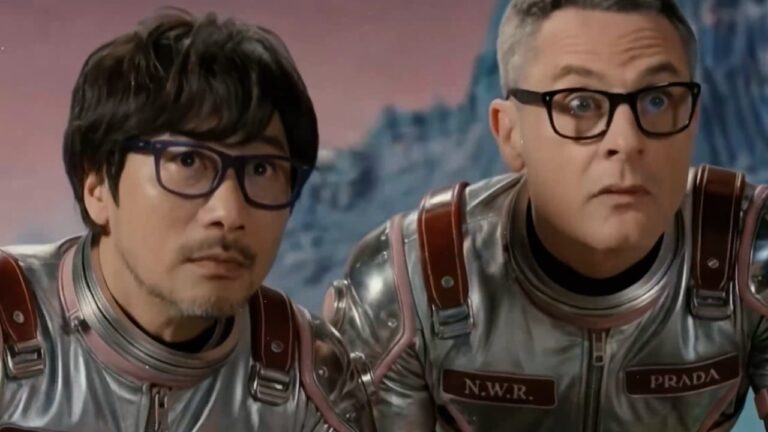
By May 2026, Kojima appeared more accepting, even starring in an AI-generated advertisement for Prada alongside filmmaker Nicolas Winding Refn, whose likeness serves as the character Heartman in the Death Stranding games. Yet by June 2026, Kojima reversed course, telling an interviewer that he wasn’t “interested” in AI. He explained that while artificial intelligence might eventually create art, he doubted he would witness that capability during his lifetime and expressed no particular investment in pursuing it.
What Becomes Standard
Despite his reservations, Kojima conceded that AI upscaling will almost certainly become the industry default. He anticipated that such technology would be embedded into workflows, tools, and devices across the creative field. His discomfort with this trajectory did not stem from a belief that it could be prevented. Rather, he worried that the preservation of intentional artistic choice stood to be lost in the transition.
“This will probably become standard,” Kojima said. “But I don’t much like that idea.”
Source: Kotaku
Frequently Asked Questions
What is DLSS 5?
DLSS 5 is NVIDIA graphics card technology that enhances computer-generated characters in the uncanny valley to appear more lifelike. A leaked version circulated in late August 2026, though no official Death Stranding 2 support has been announced.
What are Kojima's main concerns about DLSS 5 and AI upscaling?
Kojima worries that AI systems cannot understand the creative intent behind original artistic choices, such as specific lighting setups in film or dynamic range decisions in audio, and could overwrite these deliberate decisions when automatically enhancing work.
Has Kojima always been skeptical about AI in games and media?
No. In 2025, he compared AI to the 2D-to-3D graphics transition and called it a 'friend' for development efficiency. By June 2026, however, he stated he wasn't interested in AI, with his concerns crystallizing on the KOJI10 podcast.
