
Key takeaways
- Benjamin Satterley, English wrestler known as Pac, died at age 40, shocking the AEW wrestling community and fans who had come to professional wrestling through the promotion.
- Satterley was best known for his work in Death Triangle with the Lucha Brothers, holding the AEW Trios Championship for 126 days, and for his celebrated feud with Orange Cassidy.
- Fellow wrestlers revealed Satterley was a beloved friend and colleague off-screen, with Will Ospreay calling him "the greatest export from our country" and describing their 20-year friendship.
Benjamin Satterley, the English professional wrestler known as Pac and “the Bastard,” died on September 28. He was 40.
The wrestler, born in Newcastle upon Tyne, began his wrestling career in 2004 and performed across organizations worldwide. All Elite Wrestling confirmed his passing through an official statement, describing him as a performer who captivated fans with innovative work. His death came the day after his final match, a bout against Andrade El Idolo at an AEW event on Saturday.
For those who had begun watching wrestling more recently through AEW, the loss felt particularly disorienting. A performer in his prime seemed to be gone with no warning. The wrestling community immediately began sharing tributes, with fellow performers revealing what Satterley had meant to them both inside and outside the ring.
The Shock of Sudden Loss
Satterley’s death struck many as incomprehensible. At 40, he was only five years older than some of the newer generation of wrestling fans who had grown deeply attached to watching him perform. The recent loss of Andy Williams, known as The Butcher, at age 48 had already unsettled the wrestling community. Two losses in proximity, both from wrestlers still considered vital to active competition, underscored how unpredictable mortality could be even among athletes in peak physical condition.
A Performer Still in His Prime
Those who had followed Satterley’s work in AEW faced a particular kind of grief. He was not a veteran from another era whose prime years lay decades in the past. He was someone actively wrestling, challenging for titles, feuding with the wrestlers fans followed week to week. His last match seemed routine—a standard part of the AEW card that offered no indication it would be his final performance.
The Nature of Wrestling Fandom
Many who watched said they did not pay full attention in the moment, assuming there would be dozens more matches ahead, more chances to see his signature Black Arrow maneuver, more opportunities to watch him work with the active roster. The wrestling community continued to operate—matches would go on, new stories would begin—but Satterley’s absence from future events meant no more feuds with wrestlers fans followed weekly, no more chances to see him perform live.
Building a Wrestling Identity Over Two Decades
Satterley had constructed his reputation across more than twenty years of professional wrestling. Beginning in 2004, he worked through various organizations worldwide before his tenure in All Elite Wrestling. Unlike performers whose entire careers unfolded within a single promotion, Satterley had developed his craft across multiple wrestling cultures and styles.
The Bastard Character and In-Ring Style
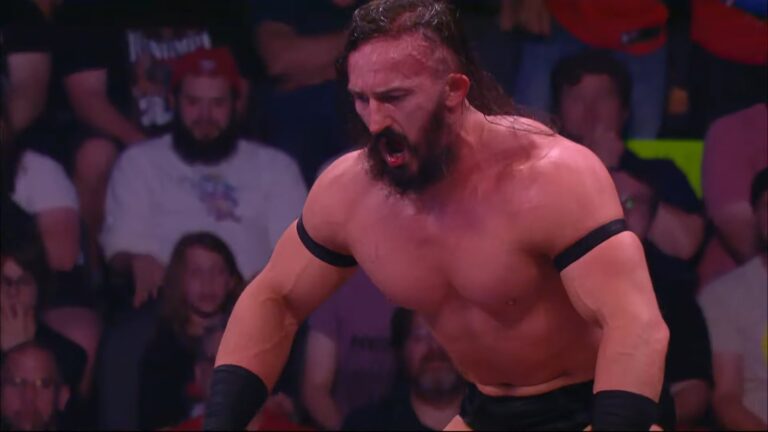
In AEW, Satterley predominantly worked as a heel—a performer designed to be booed—though his skill ensured audiences remained invested in his matches regardless of alignment. His presentation emphasized intensity: perpetually damp hair, angry vocalizations, aggressive body language. When he took the microphone, he delivered sharp verbal attacks against opponents. His character was built on being perpetually serious and angry, a deliberate contrast to wrestlers who worked comedy into their matches.
The Black Arrow, his signature move, was a twisting flip from the top rope that left audiences breathless. It became the moment fans anticipated and that opponents had to defend against, representing his philosophy as a performer—high-flying, risky, and executed with precision.
Work Rate and Match Quality
Satterley’s reputation rested on his ability to have excellent matches against nearly anyone placed across from him in the ring. He fought Kazuchika Okada, Will Ospreay, Swerve Strickland, Darby Allin, and Eddie Kingston. In every case, he produced matches that elevated both participants and gave fans reasons to invest in the story being told.
Death Triangle: Unlikely Chemistry
Satterley’s membership in Death Triangle represented one of his most celebrated runs in AEW. Paired with the Lucha Brothers—Penta and Rey Fenix—he became part of a faction that seemed unlikely at first glance. Two high-flying masked luchadors paired with a muscular English wrestler wrapped in black elastic bands created an aesthetic clash. Yet the three produced some of the most memorable trios work in the promotion’s history.
The team won the AEW Trios Championship, holding the vacated title for 126 days after defeating the Best Friends before eventually losing the belts to The Elite. The run established Death Triangle as a serious force in AEW’s tag team division and gave each member a platform to showcase their abilities alongside each other. A series of injuries interrupted the team’s momentum, and the Lucha Brothers’ eventual departure from AEW meant the three could not continue operating together at full strength.
The Orange Cassidy Feud and Match Excellence
One of Satterley’s most celebrated ongoing storylines involved his repeated matches against Orange Cassidy. The two wrestlers represented opposite poles of wrestling philosophy. Cassidy’s character emphasized indifference and chill detachment, a goofy hero who appeared unbothered until matches reached critical moments. Satterley, by contrast, was always serious, always angry, always fully invested in his rage against opponents.
Cassidy’s seeming indifference toward competition infuriated Satterley, driving him to greater heights of frustration and intensity. Many fans cited these matches as exemplars of what made professional wrestling compelling—story told through physical competition, characters expressed through in-ring choices, genuine entertainment emerging from match structure itself.
A separate early storyline saw Malakai Black spray his signature poison mist into Satterley’s face. Satterley returned at his next match wearing a blindfold, executed his offense while blinded, then ripped off the blindfold to demonstrate the poison mist had no effect, launching into an aggressive assault on Black.
Who Satterley Was Beyond the Ring
The response from other wrestlers revealed a sharp contrast between Satterley’s in-ring presentation and his actual character. Will Ospreay, who had faced him multiple times, posted that Satterley was “the greatest export from our country” and described watching his Black Arrow from inside the ring as something that “still takes my breath away.” Ospreay also shared personal context: Satterley had brought Kinder Eggs to Ospreay’s children and had converted them to Newcastle fans. “To my kids, he was Ben,” Ospreay wrote, adding that Satterley had been “an incredible friend for 20 years.”
Kyle Fletcher said that getting to know Satterley had been “as fortunate as meeting my hero, work with my hero, but even more lucky to get to know him. He was a better man than I ever could have hoped for.” Other performers described him as the most well-spoken athlete in the industry, someone who took care of wrestlers when they were in Europe, and a performer who found joy and laughed regularly outside his ring character. The tributes painted a picture of someone whose serious, angry persona was a complete departure from who he actually was as a person—a friend, a parent, someone who genuinely connected with the people around him.
Frequently Asked Questions
Who was Pac and why was his death significant?
Benjamin Satterley, known professionally as Pac or "the Bastard," was an English professional wrestler from Newcastle upon Tyne who started his career in 2004. He was significant to the wrestling community because he performed in All Elite Wrestling and was still actively wrestling at the height of his career when he died at age 40, making his sudden passing particularly shocking to the generation of fans who came to wrestling through AEW.
What was Death Triangle and how did Pac fit into it?
Death Triangle was a professional wrestling faction in AEW featuring Pac alongside the Lucha Brothers, Penta and Rey Fenix. The team held the AEW Trios Championship for 126 days, winning the vacated title against the Best Friends and eventually losing it to The Elite. Despite initial stylistic differences, the three produced acclaimed matches together until the Lucha Brothers departed AEW.
What was Pac's most notable feud in AEW?
Pac's most celebrated ongoing feud was with Orange Cassidy, whose laid-back goofy character contrasted sharply with Pac's perpetually serious and angry in-ring persona. Their matches became examples of how contrasting characters and wrestling philosophies could create compelling matches that engaged audiences deeply.
