
Key takeaways
- Street Fighter earned a 41% Rotten Tomatoes score upon October 16 release, making it worse than A Minecraft Movie and landing among the year's most incoherent films.
- David Dastmalchian's M. Bison performance stands isolated in praise, with critics calling it a masterclass in B-movie camp while most other cast members failed to match that commitment.
- The film contains blatant anachronisms like a 1987 scene featuring a 1993 song and a 1993 scene referencing a product not released until later that decade.
- Some critics defend it as intentionally anarchic entertainment that never bores its audience, though even sympathetic reviewers struggle to recommend it to newcomers.
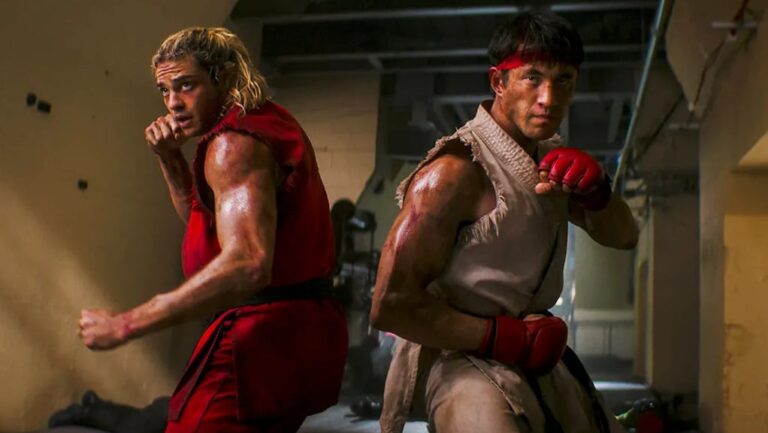
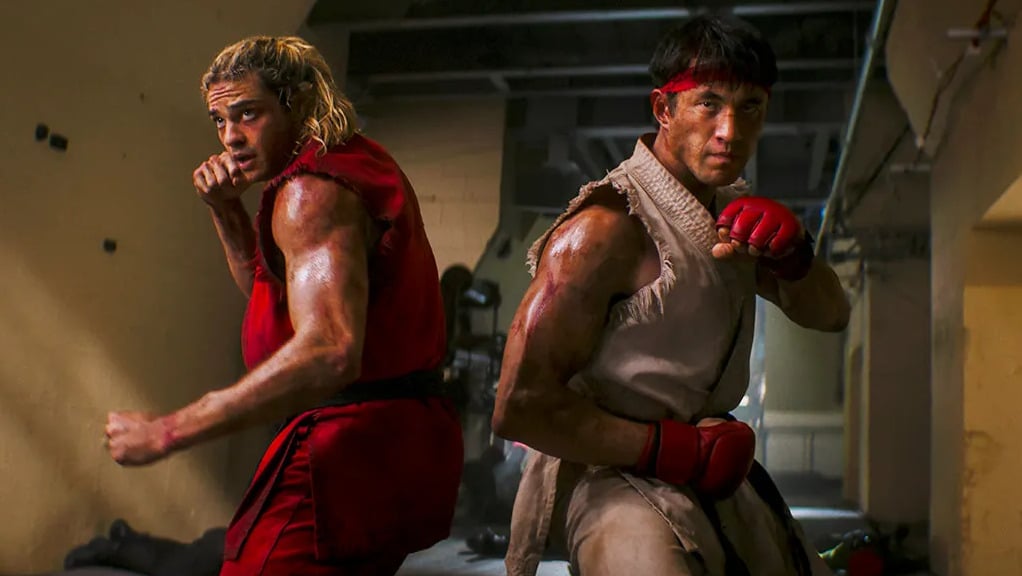
Capcom’s Street Fighter franchise received yet another Hollywood adaptation attempt on October 16, arriving with a 41 percent Rotten Tomatoes score—a result even lower than A Minecraft Movie, which many critics found entirely unwatchable. Directed by Kitao Sakurai and headlined by Noah Centineo as Ken Masters, Andrew Koji as Ryu, and Callina Liang as Chun-Li, the live-action film represents another stumble in video game adaptations’ ongoing credibility crisis.
The cast list suggested self-aware comedy from the outset. Cody Rhodes plays Guile with deliberate absurdity. 50 Cent appears as Balrog. Eric André takes the role of ring announcer Don Sauvage. This assemblage of mismatched casting seemed designed to signal the filmmakers understood the fundamental silliness of dramatizing a fighting game. Marketing positioned the film as a deliberately campy affair, nothing like a serious prestige project. Yet critical reception indicates the execution collapsed under its own ambitions. Where Mortal Kombat 2 committed fully to its B-movie premise with unflinching action-film conviction, Street Fighter emerged as a chaotic jumble of abbreviated character arcs and humor that consistently misfired.
Where Critics Saw Disaster
The critical vocabulary for Street Fighter ranged from blunt to clinical. Reviewers called it an “incoherent, irredeemable mess” and “dumber than a box of rocks.” TheWrap attacked its 1990s nostalgia angle as anachronistic and condemned what it termed “cultural collapse.” Variety found its most diplomatic criticism in technical failure: dialogue became inaudible beneath a “thundering sound mix,” essentially allowing the film’s own audio engineering to undermine its narrative.
Narrative incoherence emerged as the central complaint. The script overflows with convoluted plotting alongside humor that doesn’t connect. As the film divides between tournament sequences and M. Bison’s broader conspiracy, something ruptures in its second half. One critic speculated this signals either a troubled production or one destined to fail from conception, noting that dialogue grew increasingly fractured and was frequently shot with speakers’ backs to the camera or mouths partially obscured—suggesting substantial post-production rewrites.
The Sound Design Problem
Technical issues compounded the narrative failures. Beyond the inaudible dialogue, the film’s mixing created an unintentional barrier between audience and story. This wasn’t merely bad sound work; it was sound work that actively sabotaged the film’s ability to convey information.
Character Development Casualties
The ensemble approach that populated the screen with recognizable faces also scattered the storytelling across too many shallow arcs. With so many fighters demanding screen time, none received sufficient development. The film functioned as a procession of fight scenes rather than a coherent narrative.
Tonal Whiplash and Structural Failure
Reviewers noted constant shifts between intended comedy, action spectacle, and what may have been unintentional cringe. Director Sakurai appeared unsure which film he was making, resulting in one described as among the sloppiest and most incoherent releases of the year.
David Dastmalchian’s Isolated Brilliance
One performance transcended the surrounding wreckage: David Dastmalchian’s M. Bison. Playing the franchise’s chief antagonist, Dastmalchian delivered what critics called a masterclass in B-movie camp. An early scene shows him crushing a scientist’s eye sockets while the skull cracks and blood splatters across his forehead, his expression captured as something approaching ecstasy. This occurs within the first ten minutes and apparently establishes a tonal standard nobody else in the film approached. Dastmalchian’s willingness to fully commit to unhinged villainy made him paradoxically the most entertaining element of an otherwise fractured movie.
Chronological Nonsense
Beyond storytelling failures, Street Fighter collapses under basic continuity errors. The narrative opens in 1987 with Ryu listening to “What’s Up” by 4 Non Blondes on his Walkman—a song that wouldn’t release until 1993. When the timeline jumps to 1993, Ken’s manager proudly announces that Taco Bell will name a Gordita after him, despite Taco Bell not adding the Gordita to its menu until years afterward. These aren’t peripheral continuity gaps but central timeline contradictions suggesting either profound indifference to internal logic or production chaos too severe to catch obvious errors. One critic theorized the film exists “outside time itself,” a Frankenstein monster so oblivious to narrative and stylistic cohesion that the anachronisms become almost spiritual.
The Minority Defense
Not all critics condemned Street Fighter without qualification. IndieWire offered faint praise by noting the film never bored its audience—damning with minimal enthusiasm. The New York Times adopted a more charitable interpretation, suggesting the movie captures what a kid who’d lost all their arcade coins to Street Fighter might hallucinate in dreams. This recontextualizes the incoherence as intentional psychedelia rather than incompetence, though whether the filmmakers intended such reading remains unclear.
Fighting Sequences Over Character
Defenders emphasized that the film’s true commitment lies in spectacle rather than narrative. Punchy pyrotechnics of fight sequences showcase diverse fighter personalities, though juggling too many showdowns tires viewers and obscures priorities. This limitation can be reframed as capturing arcade fantasy: successive “and then, and then” fighter battles manifesting as the arcade player’s imagination brought to screen.
Self-Aware Moments That Almost Worked
Callina Liang’s Chun-Li occasionally breaks the fourth wall with knowing jabs, calling out how ridiculous the male characters sound when waxing philosophical like Steven Seagal or Van Damme. These moments might have landed harder if the film ever transcended the material it mocked. Instead, it remains content punching downward at itself and 1990s kitsch while remaining trapped within that era, apparently satisfied that this represents the ceiling for video game adaptations.
Controlled Chaos as Viewing Strategy
From another angle, Sakurai’s approach reads as deliberately anarchic. His management of an enthusiastic ensemble and chaotic action-comedy blend doesn’t always succeed—too many characters servicing insufficient story. Yet the strategy consists of landing as many punches as possible before the round timer expires. Despite numerous misses, the ones that connect hit hard. For audiences willing to embrace the film as a Frankenstein monster operating outside conventional logic, enough appeal exists in its attract mode to press start.
Recommendation and Aftertaste
Street Fighter remains highly watchable, and convincing oneself that fun is happening proves not difficult. Its aftertaste turns bitter and its center remains hollow, making recommendation difficult—especially as an introduction to the Street Fighter universe. Even admirers acknowledge the film provides enough spectacle to entertain with the right group and the right mindset, though most viewers should probably skip it.
Source: Kotaku
Frequently Asked Questions
What is the Street Fighter movie's Rotten Tomatoes score?
The film holds a 41 percent score on Rotten Tomatoes, lower than A Minecraft Movie, according to early reviews.
Who directed the Street Fighter movie?
Kitao Sakurai directed the film. He is best known for his work on the Eric Andre show.
Which actor received the most praise from critics?
David Dastmalchian, who plays M. Bison, received isolated praise as delivering a masterclass in B-movie camp, though critics noted no other cast member came close to his level of commitment.
