
Key takeaways
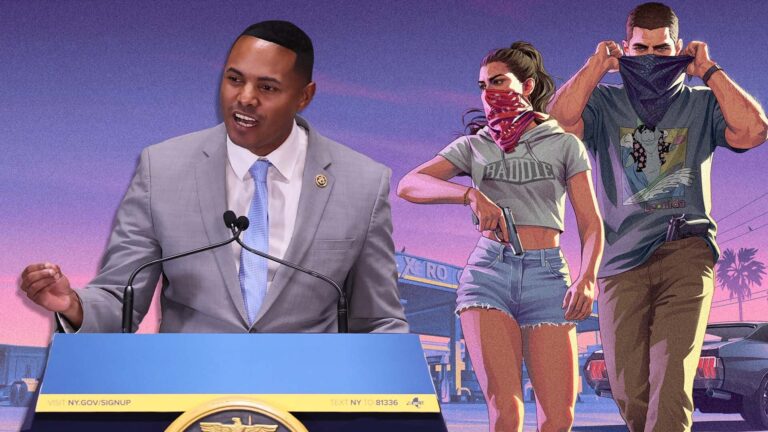
- Rep. Ritchie Torres announces the Power To The Players Act, directing the FTC to establish regulations protecting game ownership and preventing delisting.
- NBA 2K25, the fifth best-selling game of 2024, will be delisted October 30 with servers offline January 1, 2027, exemplifying the ownership crisis.
- The legislation requires publishers grant genuine ownership rights and provide offline modes that persist after server shutdowns, restoring practices from the 1980s-2000s.
- Torres frames the bill as restoring historical ownership norms and addressing rising game prices as an affordability issue across the economy.
The Crisis Sparking Legislative Action
The fifth best-selling game in the United States during 2024 will become mostly unplayable within months. NBA 2K25, a basketball simulation that millions invested hundreds of hours and hundreds of dollars into annually, will be delisted from digital storefronts on October 30. Online servers supporting the game will shut down completely on January 1, 2027. Players who paid $70 at launch will find most features permanently inaccessible.
This scenario prompted Democratic congressman Ritchie Torres to announce the Power To The Players Act, legislation that would direct the Federal Trade Commission to create regulations protecting video game ownership rights. “I think there should be a simple rule: if you pay for it, you own it,” Torres told Kotaku.
The Ownership vs. License Problem
The existing system treats game purchases as revocable licenses rather than ownership. Publishers remove older games from digital stores and disable online services to concentrate players and spending on newer releases. A player who invests in a game at full retail price discovers their purchase holds no permanent value once the publisher moves on.
“Consumers must have the right to own, the right to play, and the right to transfer the games they buy,” Torres stated in a formal release. “A game that can be taken away the moment a company pulls the plug is not a purchase. It is a rental disguised as a sale. Families in the Bronx and across the country save up to buy these games, and they deserve better than a license that can vanish at any time.”
What Power To The Players Would Require
The legislation mandates that companies selling digital games grant consumers genuine ownership rights rather than revocable licenses. Additionally, any game built around online features must include functional offline modes that players can access indefinitely, even after publishers shut down supporting servers.
Eliminating the Technical Excuse
Publishers have long argued that online-dependent games cannot function without active servers. Mandatory offline functionality eliminates that justification. Players would retain access to the core experience they paid for, even if online-specific features eventually disappear. Torres emphasized consumers should “keep playing long after a company moves on.”
The All-Digital Future Accelerates the Problem
Sony has announced the end of disc production for the PlayStation 6, effectively mandating a download-only experience for the next console generation. Grand Theft Auto VI will release exclusively as a download code in a box starting at $80, giving players no ownership stake in a physical copy and no resale or transfer rights.
The Stop Killing Games advocacy group spent the past year organizing around these concerns, calling on companies to stop selling games that become completely unplayable when online support ends. Torres’ bill codifies what this movement has been demanding: a legal framework preventing the destruction of purchased media through deliberate server shutdowns.
Congressional Reality and Opposition
The path from introduction to law faces steep obstacles. Congress struggles to pass legislation generally, with an estimated 87 percent of bills never reaching a full vote. Publishers demonstrate significant lobbying capacity on issues affecting their business models, and mandatory offline functionality would constrain their ability to manage game catalogs and direct player spending.
Building Coalition Support
Torres has not confirmed whether the bill will have co-sponsors or Republican support. The congressman noted he did not purchase NBA 2K25, though he grew up playing Grand Theft Auto, Resident Evil, and SOCOM—games from an era when purchased media could be kept indefinitely.
A Restoration of Historical Ownership
At 38 years old, Torres stands roughly 20 years younger than the median House member. He describes his bill not as radical transformation but as restoration. Games from the 1980s through the 2000s could be purchased and owned indefinitely without requiring corporate infrastructure to remain active.
“Rather than some radical transformation of video game ownership, his bill would be a restoration to the historical norm of buying and playing games that existed all the way through the ’80s, ’90s, and 2000s,” Torres told Kotaku. He also framed the issue as an affordability problem: game prices rise across the economy while players see purchases become worthless when publishers move on.
Beyond Games: A Broader Precedent
The bill excludes movies and music, though consumers face similar delisting issues with films purchased through digital platforms. Torres suggested the exclusion reflects the unique relationship players develop with games through time investment and collection.
However, he indicated successful legislation could set precedent for broader digital media rights. “I hope we can set a precedent that will be followed elsewhere in the digital economy,” Torres told Kotaku, suggesting the gaming ownership fight represents a foundational argument extending across the digital marketplace.
Source: Kotaku
Frequently Asked Questions
What would the Power To The Players Act require from game publishers?
The bill would direct the FTC to establish regulations requiring publishers to grant consumers genuine ownership rights for digital games and to provide offline modes that function even after online servers shut down.
Why did the NBA 2K25 delisting prompt this legislation?
NBA 2K25, the fifth best-selling game of 2024, will be delisted from digital storefronts on October 30 with online servers going offline January 1, 2027, making most features unplayable despite players paying $70. The delisting exemplifies a widespread pattern Torres seeks to prevent.
What obstacles does the bill face in Congress?
An estimated 87 percent of legislation never reaches a full vote, and publishers are expected to lobby hard against restrictions on their business models. Torres has not confirmed whether the bill will have co-sponsors or Republican support.
