
Key takeaways
- Guillermo del Toro attempted to adapt BioShock into a film but abandoned the project after what he called 'probably one of the most disastrous calls I've ever had' with the studio.
- Del Toro argues that video games and films operate under fundamentally different narrative rules: games require player agency and puzzle-solving, while films demand passive observation.
- Despite the failed adaptation attempt, del Toro remains an active gamer who plays Angry Birds every day and admires games like Death Stranding, Shadow of the Colossus, and Left 4 Dead.
- Netflix's BioShock adaptation is still in development but with a significantly reduced budget and a more intimate approach focused on a 'personal point of view' rather than a grand blockbuster.
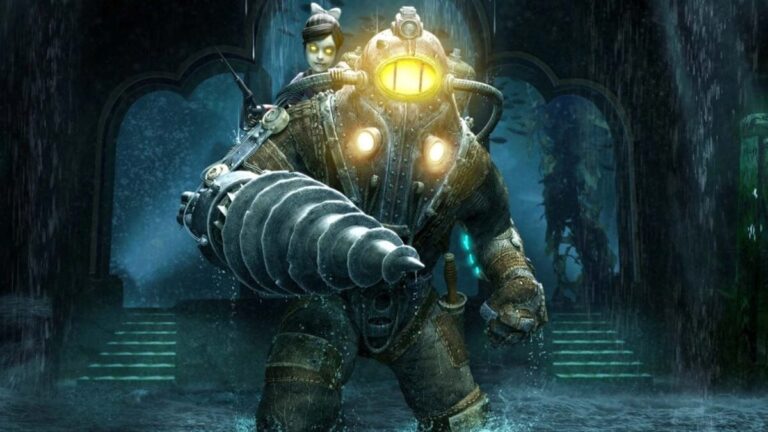
Guillermo del Toro tried to make a BioShock movie, and the experience was frustrating enough that he has sworn off adapting games to film entirely.
In a recent interview with IGN, the acclaimed director, known for films like Hellboy and Pan’s Labyrinth, discussed his venture into translating a game property to cinema. When asked whether he would be interested in making a film based on a video game, del Toro revealed that he had already attempted exactly that with BioShock, and the process ended badly.
“We had a couple of calls. They are two of, probably one of the most disastrous calls I’ve ever had,” del Toro told IGN, referring to conversations with the studio behind BioShock.
The exchange highlighted a fundamental disagreement between del Toro and the game’s creators over how a property should transition from an interactive medium to film. Del Toro described the conversation as “very contentious,” and the experience left him convinced that games and films operate under entirely different narrative rules. The mismatch was significant enough that he declared himself done with the prospect of adapting games to cinema.
Why Games and Movies Don’t Translate Easily
Del Toro’s reasoning for abandoning the project cuts deeper than creative disagreement. He articulated a structural argument: the storytelling mechanics of video games are fundamentally incompatible with how cinema tells stories.
The Puzzle of Interactive Narrative
In games, del Toro explained, players solve puzzles and assemble information themselves as part of the core experience. This active participation shapes how narratives unfold in ways impossible to recreate in a passive medium. When he developed the never-completed game Insane years earlier, he and his team created what he called a “mandala” structure, a design philosophy centered on giving players the illusion of infinite choice while subtly guiding them toward specific outcomes.
“You have to give the illusion of an infinite sandbox, and you lead audiences to the right or to the left through their own decisions, quote unquote, but you sort of have to corner them,” del Toro described the approach.
This tension between apparent freedom and guided design is what makes games work as interactive experiences. The player must feel agency even when that agency is constrained.
Cinema Demands a Different Approach
A film viewer, by contrast, has no puzzles to solve and no information to assemble. Watching and playing are opposite activities, requiring opposite cognitive engagement. While both mediums can feature moving cameras and cinematic framing, surface similarities that might suggest compatibility, del Toro emphasized that “the storytelling is very different.”
The core tension in adapting BioShock, or any complex game with environmental storytelling, systemic gameplay, and emergent player agency, is that these elements have no direct equivalents in film. A director must choose: preserve the game’s narrative or preserve the experience that made the game special. Doing both is nearly impossible.
BioShock’s identity comes partly from how players uncover its story through exploration and discovery. The world reveals itself based on player choice and movement through space. In a film, that exploration becomes passive observation. The sense of uncovering secrets, fundamental to BioShock’s appeal, collapses into exposition.
Why the Calls Went Badly
The “disastrous calls” likely centered on this irreconcilable difference. If del Toro was pitching a vision of BioShock that required stripping away its interactive identity, the game’s creators would naturally resist. If they wanted a film that preserved that interactive spirit, del Toro would have argued it was impossible. Either way, both sides saw adaptation as a losing proposition from their perspective.
A Gamer Despite the Failure
Del Toro’s reluctance to adapt games does not reflect disinterest in gaming itself. He is an active player with surprisingly eclectic tastes across different genres and platforms.
Games That Impressed Him
Del Toro singled out Left 4 Dead, Death Stranding, and Shadow of the Colossus as games he genuinely enjoys. Shadow of the Colossus particularly impressed him, not for its mechanics but for its ineffable qualities, what he called “so many intangible things” that defy easy explanation or translation to other forms. That the game moved him this way despite being difficult to articulate speaks to why he loves games: they can create experiences cinema and literature cannot.
He also plays Dead Cells regularly, though he admits to frustration with its respawning mechanic. The endless respawning loop, he suggested, feels punitive rather than rewarding to someone accustomed to linear narrative progression. For a director, repetition and retry loops are obstacles, not opportunities.
The Angry Birds Obsession
Perhaps most revealing, del Toro disclosed that Angry Birds is his most-played game by far. “Every day in my life, every moment I have free, I’m still playing Angry Birds. I’m really good at it,” he said.
The disconnect between a filmmaker known for gothic supernatural horror and baroque visual production playing a 2009 mobile puzzle game highlights his genuine curiosity about how games work across different scales and ambitions. He does not dismiss casual games; he plays them constantly. His interest spans from art-house indie experiences to mass-market mobile hits.
BioShock Still Moving Forward at Netflix
If del Toro could not make BioShock work for cinema, Netflix and 2K are attempting a different approach.
The film has been in some form of development for over a decade. In 2022, 2K announced that Netflix would produce the film adaptation. By 2024, producer Roy Lee confirmed the project was still moving forward, but with substantial revisions to the original plan.
The budget had been reduced significantly from its initial scope. Lee explained the strategic recalibration at Comic-Con in 2024: “We’re doing a much smaller version. It’s going to be a more personal point of view, as opposed to a grander, big project.”
This recalibration aligns with del Toro’s central insight about game-to-film adaptation. Perhaps BioShock does not require a sprawling, effects-heavy spectacle at all. A smaller, more focused film centered on world and character rather than attempting to recreate the systemic gameplay that defines the game might be the path forward, the exact opposite approach from whatever del Toro was apparently advocating during those disastrous calls.
Source: Kotaku
Frequently Asked Questions
What happened when Guillermo del Toro tried to adapt BioShock into a film?
Del Toro had contentious calls with the studio behind BioShock and ultimately walked away, calling them 'probably one of the most disastrous calls I've ever had.' He concluded that games and films use fundamentally different storytelling methods that make adaptation nearly impossible.
Why does del Toro believe games cannot be easily adapted to film?
According to del Toro, games require active participation from players who solve puzzles and assemble information, whereas films demand passive observation. While both can use cinematic techniques like camera movement, the storytelling is fundamentally different and incompatible.
Is the BioShock movie still being made?
Yes. 2K announced in 2022 that Netflix would produce the film adaptation. By 2024, producer Roy Lee confirmed it was still in development, but with a significantly reduced budget and a 'more personal point of view, as opposed to a grander, big project.'
