
Key takeaways
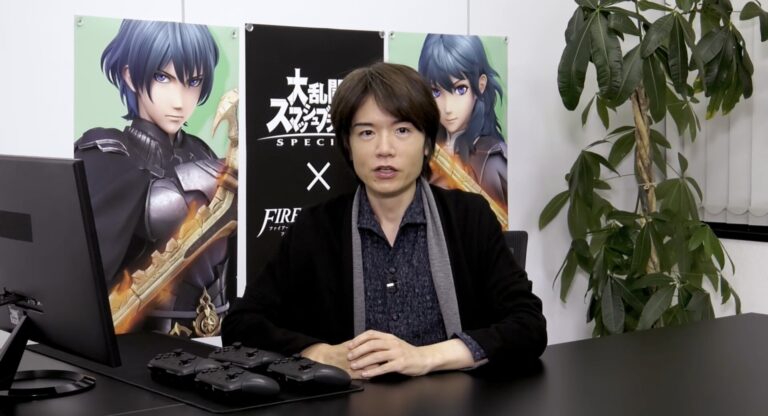
- Masahiro Sakurai discontinued his 16-year Game Designers Award at Tokyo Game Show, warning that gaming without originality will die slowly.
- Original games struggle commercially compared to familiar titles, creating market pressure against creative risk-taking despite Sakurai's own success with Kirby and Super Smash Bros.
- Steam expanded from 275 annual titles in 2010 to over 19,000 today, flooded by AI-generated copies that drown out genuinely original work.
- Sakurai argues that while AI can replicate existing styles, true original creators like Fumito Ueda remain irreplaceable and necessary for the industry's survival.
Masahiro Sakurai, the legendary designer behind Kirby and Super Smash Bros., has ended a 16-year tradition at Tokyo Game Show with a stark warning about gaming’s future. For 16 years, Sakurai presented an award recognizing games that pushed creative boundaries through original design ideas. This year marked the final presentation of the prize, and in marking the occasion, Sakurai delivered a grim assessment: an industry that loses originality will die slowly.
The observation emerged during his speech at the awards show and elaborated further in an interview with Denfaminico Gamer, reflecting on why he decided to discontinue the award despite its importance to him.
The Award’s Mission and Legacy
Sakurai created the Game Designers Award to celebrate games that did things differently, independent of their commercial success. Over 16 years, the prize honored titles that embodied creative risk-taking and novel design thinking. Past winners included the original Life Is Strange, Mario Kart: Home Circuit, Viewfinder, and Scribblenauts—games that found fresh approaches within their respective genres or carved out entirely new spaces.
The award’s core principle was straightforward: recognize designers willing to explore uncharted territory. This philosophy aligned with Sakurai’s own design methodology throughout his career, making the award an extension of his values within the industry.
Originality as an Afterthought
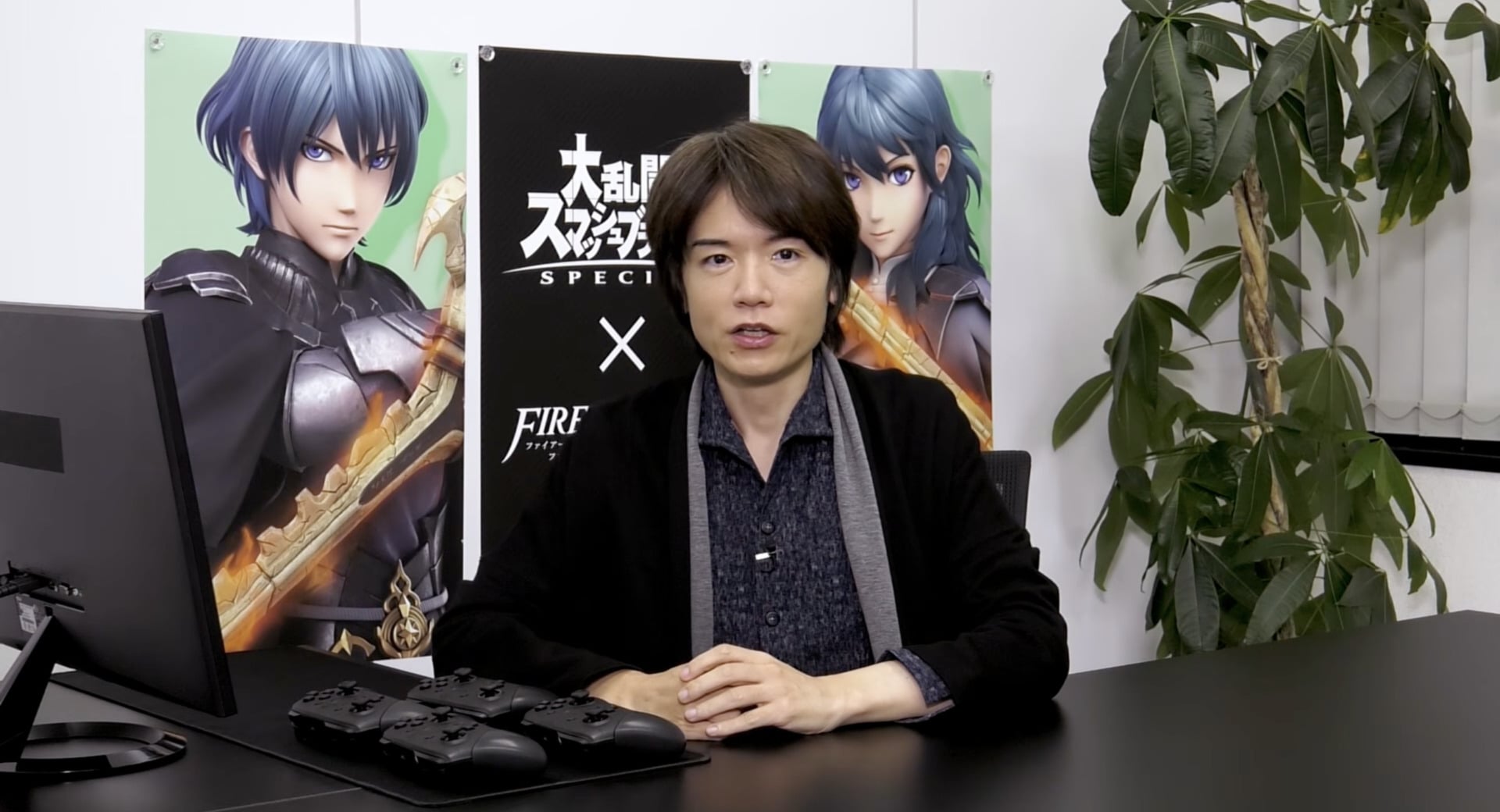
During his speech at Tokyo Game Show, Sakurai painted a troubling picture of the industry’s priorities. Though it may sound grave, he stated, originality does not actually have a strong impact on sales and ranks low on the list of priorities for many publishers and consumers alike.
He used a metaphor of convenience store drinks: limited-time flavors generate excitement initially, but familiarity breeds preference for the expected. The more audiences become accustomed to something, the more they gravitate toward the familiar. Most people tend to want tastes that match their preferences and meet their expectations. If audiences consistently choose what they already know, creators have little incentive to experiment, and publishers facing pressure to deliver predictable returns rarely fund games designed to challenge rather than comfort.
Building Originality Within Existing Forms
The Iconic Examples
Sakurai’s own career demonstrates that originality does not require inventing new genres—it requires rethinking how players interact within them. Both Kirby and Super Smash Bros. entered categories already saturated with competitors. 2D platformers existed before Kirby; fighting games predated Smash Bros.
What made these games original was the design philosophy Sakurai brought to them. Instead of copying existing templates, he asked: what new ways can players act and interact in this space? That question led to Kirby’s signature copy ability and to Smash Bros.’ innovative approach to the fighting game structure. These were revolutionary new ways to play within established ones.
Challenges in the Modern Era
Yet this approach has become harder to execute. According to Sakurai, the first important thing is whether a team can come up with an original idea at all. Getting the idea is one challenge; convincing staff that the idea will work is another; and marketing it to audiences who do not yet understand what makes it special is a third.
Publishers face a fourth hurdle: how to sell something without an obvious comparison point. They must articulate selling points for something audiences do not yet understand, relying on marketing approaches built around comparisons to existing titles. If you are a game publisher, Sakurai explained, it is difficult to share that big picture and answer the basic question of what the game’s selling points actually are.
Consumer expectation compounds the problem. Nowadays, so many games are described as similar to existing titles—in other words, what everyone already wants. But originality means creating something that is not already what people are after, and doing so deliberately. For that reason, Sakurai concluded, it remains a high hurdle.
The Explosion of Volume
When Sakurai founded the award in 2010, Steam hosted roughly 275 games per year. The platform has since grown to hosting over 19,000 titles annually. This month alone, Steam Next Fest features more than 8,000 demos, many AI-generated or designed to copy existing ideas.
Volume creates noise. With thousands of games competing for attention, even genuinely original titles struggle to break through. The signal-to-noise ratio has become so skewed that originality has stopped being an asset and become a liability, because audiences cannot identify what they are looking at.
Sakurai views artificial intelligence as an accelerant on this problem. Although 19,000 titles is already a lot, he stated, that number will only grow because AI will be used to turn out games at scale. Most will end up unplayable, making the marketplace impossible to track or understand. With those AI games, the vast majority will be direct copies of games people have already seen.
Imitation at Scale
Sakurai illustrated the problem with a specific example. Librarian: Tidy Up the Arcane Library presents a straightforward concept: a puzzle game set in a magical library where disorganized books need sorting. The core mechanic is simple enough that it became immediately and endlessly repeatable. Games like Supermarket Chaos and Needle in a Haystack Simulator followed quickly—puzzle games built on identical mechanical foundations with surface-level theming variations.
That kind of imitation will be simple for AI to conduct, Sakurai observed. Once a template works, AI can generate infinite variations, flooding the marketplace with functional but creatively bankrupt products.
What AI Cannot Replicate
This problem extends beyond indie puzzle games. AI could theoretically analyze the atmospheric design and artistic sensibilities of Fumito Ueda’s ICO and Shadow of the Colossus and generate something superficially similar, but it could never create what those designers will create next. Original vision requires intent, experience, cultural context, and the ability to ask questions that have not yet been answered. AI can remix and recombine; it cannot pioneer. This recognition shapes Sakurai’s cautious optimism: if spaces exist for creators like Ueda to continue their work, if financial models and publisher backing allow for genuine experimentation, the industry survives.
The Stakes of Standing Still
Sakurai’s decision to discontinue the award acknowledges a difficult reality: an award celebrating originality cannot reverse the economic and technological forces working against it. No prize can compel an industry to value what audiences, statistically, do not reward in the marketplace.
Yet his final message remains a challenge to that marketplace. The industry exists today because there have always been new ideas and experiences, and people making them. Games are not inevitable. An industry that systematically chooses safety will not collapse overnight—it will die slowly, eroding from within as creativity drains away and only imitation remains. By ending the award, Sakurai is being honest about what a prize cannot do while appealing to the creators, publishers, and audiences who still believe that making something no one has seen before remains worth the difficulty.
Source: Kotaku
Frequently Asked Questions
Why did Masahiro Sakurai discontinue the Game Designers Award?
Sakurai ended the 16-year award because he concluded that an award celebrating originality cannot reverse the industry's preference for familiar, commercially safe games over creative risk-taking. No prize can compel an industry to value what audiences statistically do not reward in the marketplace.
How many games are released on Steam per year compared to when Sakurai founded the award?
When Sakurai created the award in 2010, Steam hosted roughly 275 games annually. Today, the platform hosts over 19,000 titles per year, with Steam Next Fest this month alone featuring more than 8,000 demos.
Can artificial intelligence create genuinely original games according to Sakurai?
No. While AI can analyze and imitate existing game designs, it cannot create what true original designers will create next, as originality requires intent, experience, cultural context, and the ability to ask questions that have not yet been answered.
