
Key takeaways
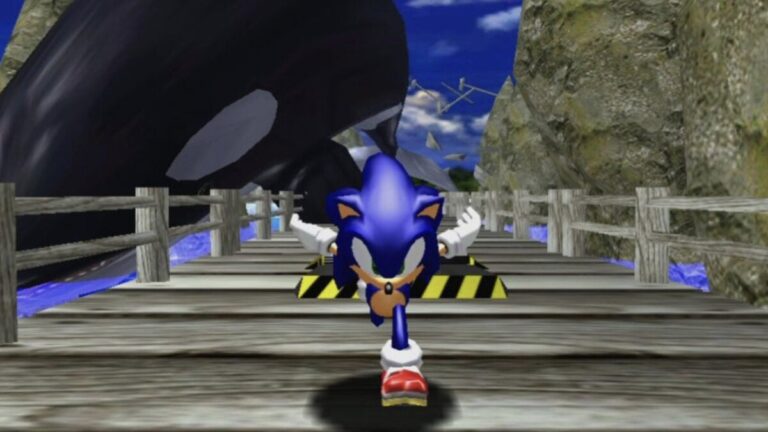
- Sonic Adventure was the hardest Sonic game to develop because the team had no precedent for creating engaging 3D gameplay with high-speed movement and had to solve core design problems through extensive trial and error.
- Sonic Team struggled with translating Sonic's linear 2D design to open 3D spaces, a challenge that recurred 20 years later with Sonic Frontiers, which took until halfway through development to find its design solution.
- Managing multiple character storylines, the Chao Garden system, field music, and voice acting for the first time created unprecedented workload demands on Sonic Adventure's development team.
In a discussion with Continue magazine marking the 35th anniversary of Sonic the Hedgehog, three veterans from Sega’s Sonic Team reflected on the most demanding projects in the franchise’s history. Takashi Iizuka, current head of Sonic Team, alongside composer Jun Senoue and developer Kazayuki Hoshino, identified the original Sonic Adventure as the most difficult game the studio has ever created—a project that pushed the boundaries of what the team knew was possible in 3D game design.
The Transition to 3D: A Leap Into the Unknown
When Sonic Team set out to bring the franchise into three dimensions, they faced a fundamental problem that no precedent could solve. Iizuka explained that after creating Green Hill Zone in 3D, the team discovered that simply allowing the player to run through the familiar landscape was not engaging. The core mechanic that worked in 2D—linear movement at high speed—did not translate naturally to a full 3D environment. This realization forced the studio into an extended period of experimentation.
Trial and Error as Development Method
Without existing 3D games of this type to reference, Sonic Team had to solve problems that no one had encountered before. Iizuka stated: “We just didn’t know how to make it more interesting, so we ended up doing a lot of trial and error all the way through development. There weren’t any similar 3D games where you ran like this, so we didn’t know the answers either.” This meant that core design decisions could only be validated through repeated iteration and testing, extending the development timeline and consuming resources at an unprecedented scale.
Managing Unprecedented Workload
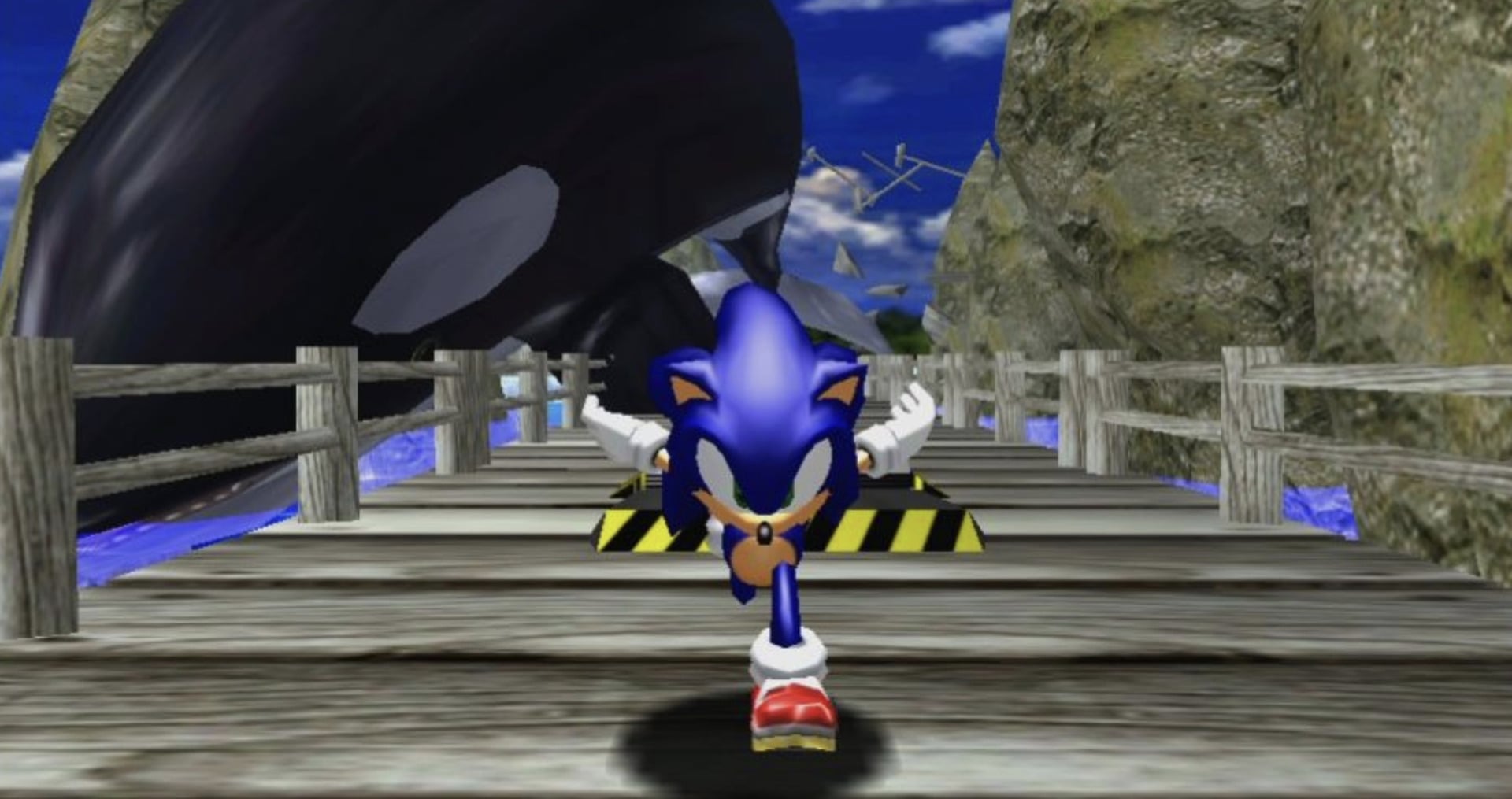
Senoue, who served as the sound director, recalled that development began in 1997 and demanded a volume of work he had never experienced before joining the project. The team had committed to developing narratives for six playable characters alongside the Chao and Chao Garden systems, composing field music for multiple environments, and implementing voice acting—a technology and workflow that was entirely new to the team at the time. Managing these simultaneous components while still solving the core 3D movement problem created immense pressure on the development staff.
Why Sonic Adventure 2 Proved Easier
By contrast, the sequel presented fewer obstacles. Sonic Adventure 2 benefited from answers the original game had uncovered and from a fundamentally different production structure. The team relocated to the United States to develop the sequel, mirroring the approach used for Sonic the Hedgehog 2 and Sonic the Hedgehog 3 decades earlier. This geographic shift and the collaborative structure it enabled led directly to iconic sequences like City Escape, which emerged from the team’s brainstorming in that environment.
Iizuka reflected that Sonic Adventure 2 proved “a lot more enjoyable” to develop, largely because the foundational 3D design problems had been solved. The team could focus on iteration and refinement rather than fundamental discovery.
Sonic Frontiers: History Repeating Itself
Decades later, when Sonic Team began work on Sonic Frontiers, the studio encountered a challenge that echoed the original Sonic Adventure’s problems. The decision to create a vast, open-ended space came early and was made quickly, but implementing a way for players to have fun within that enormous environment proved far more difficult than anticipated.
Open World Without a Linear Path
Every previous Sonic game operated under a principle that Iizuka outlined: a defined path through the level ensured that players could experience speed and momentum—the franchise’s core appeal. With Sonic Frontiers, that fundamental design principle no longer applied. The game presented players with a massive space and no single prescribed route through it. The team started development without a clear solution for making such an expanse entertaining and cohesive.
Finding Solutions Through Development
As with Sonic Adventure, answers had to be discovered during production rather than planned beforehand. Iizuka acknowledged that Sonic Frontiers required development to reach approximately its midpoint before the team arrived at a design framework that made the open space compelling. This meant that roughly half the project’s timeline was spent solving fundamental design questions—a significant portion of resources devoted to exploration rather than execution.
Critical and Commercial Success Despite Development Challenges
Despite the development struggles—or perhaps because of them—both Sonic Adventure and Sonic Frontiers emerged as among the most successful and cherished titles in the franchise. Both achieved critical and commercial recognition, and both remain fondly remembered by players and fans of the series.
Senoue also noted that composing music for Sonic Generations presented substantial difficulties, yet that project similarly achieved both critical acclaim and commercial success. The pattern suggests that the challenges inherent in pushing the franchise’s design boundaries may have resulted in games that resonated deeply with audiences because they attempted something genuinely new.
The Cost of Innovation in Franchise Development
The reflections from Sonic Team illustrate a paradox in video game development: the projects that prove most difficult to create often become the most memorable and successful. Sonic Adventure’s 1997 development, with its unprecedented scope and novel 3D challenges, created something that players still discuss decades later. Sonic Frontiers’ struggle to define an engaging open-world experience resulted in a game that moved the franchise into new territory.
For game development studios, the willingness to enter unknown design territory—and the capacity to absorb the trial-and-error that such territory demands—can distinguish a forgettable project from a franchise-defining one. Sonic Team’s experience across these generations suggests that difficulty in development does not predict failure; instead, it often signals that a team is attempting something that has not been done before, which is precisely the condition that can generate lasting impact.
Source: Kotaku
Frequently Asked Questions
Why was the original Sonic Adventure so difficult to make?
Sonic Team had no existing 3D games of its type to reference and had to discover how to make running through a 3D space engaging. The team also managed unprecedented scope: six playable characters with unique stories, the Chao Garden system, voice acting (new to them at the time), and field music composition.
How did Sonic Adventure 2 end up being easier to develop?
Sonic Adventure 2 benefited from design answers the original game had uncovered. The team also relocated to the United States for development, using a structure similar to Sonic the Hedgehog 2 and 3, which enabled better collaboration and led to sequences like City Escape.
Did Sonic Frontiers face similar development challenges?
Yes. Sonic Frontiers presented a vast open space with no single path for players to follow, unlike all previous Sonic games. The team started development without clear answers on how to make such a space fun, and it took until approximately halfway through the project to find the solution.
