

Key takeaways
- Sega's official Sonic Discord encountered widespread rule violations within minutes of launch despite family-friendly guidelines and AI content bans.
- The server implemented Slowmode, requiring two-minute delays between posts, to help moderators manage the volume of inappropriate content.
- The situation reflects a broader challenge facing gaming franchises when trying to maintain brand safety while engaging directly with notoriously unpredictable fan communities.
- Long-term success depends on whether initial disruption was a launch-day anomaly or signals ongoing moderation challenges that could drain resources.
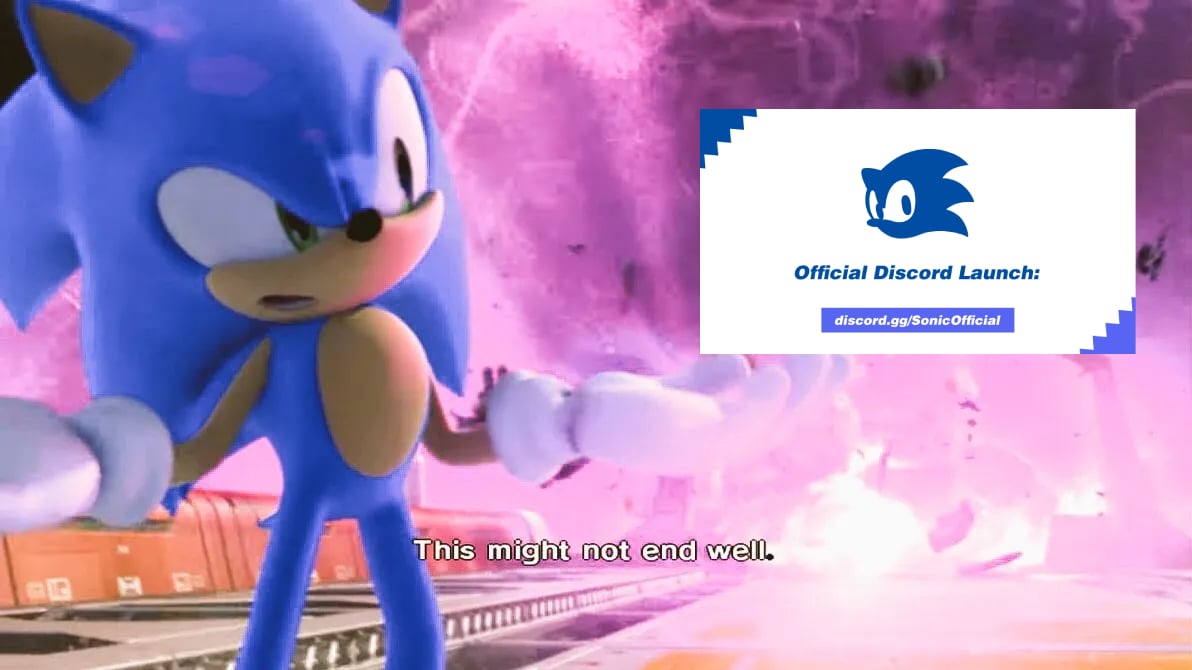
When Sega launched its official Discord server for Sonic the Hedgehog fans, the company presumably hoped to create a welcoming space where players could discuss the franchise, connect with one another, and participate in organized activities. The reality of the first hours resembled something closer to controlled chaos, with community members finding creative ways to push the boundaries of the server’s stated rules almost immediately.
The Server’s Structure and Rules
According to Kotaku’s investigation, the server includes dedicated channels for series announcements, separate spaces to discuss the video games and live-action films, and a gathering point for players interested in Sonic Racing: Crossworlds. The infrastructure reflects a thoughtful approach to organizing conversations around different aspects of the franchise, giving players straightforward ways to locate relevant discussions.
More notably, the server explicitly prohibits AI-generated content of any kind—a rule that reflects growing industry concerns about synthetic media in online spaces. The platform maintains a family-friendly content policy designed to keep conversations appropriate for all ages. These guardrails represent standard practice for official community channels, yet they proved insufficient to contain the disruption that emerged within minutes of launch.
Immediate Chaos and Content Violations
The Rapid Escalation
Community members began posting content that violated the spirit of family-friendly guidelines almost immediately upon the server’s opening. According to Kotaku, the initial wave of inappropriate posts came so rapidly that even with an attentive moderation team, content accumulated faster than it could be removed. The speed and volume of violations suggested this was not simply a matter of isolated bad actors, but rather a widespread phenomenon reflecting the culture of the server’s early adopter population.
Community Documentation
Screenshots and clips captured by community observers and shared on social media documented the escalation in real time, showing that Sega’s moderators were contending with a scale of disruption that required intervention beyond the standard rule framework. Community members appeared to be testing what they could get away with before moderation established consistent enforcement patterns.
Moderation Response and Technical Measures
Slowmode Implementation
The response involved implementing Slowmode, a Discord feature that requires users to wait two minutes between posts. This technical measure effectively throttled the pace of conversation, giving moderators time to review messages and take action while keeping the chat readable for regular users. The need for Slowmode so quickly into the server’s operation indicated that simple rule enforcement and human moderation were struggling to keep pace with the volume of problematic content.
Structural Solutions Beyond Manual Enforcement
The implementation suggests Sega’s recognition that this was not an isolated incident but rather a structural challenge requiring technical solutions. By extending the time between posts, the server became less rewarding for users seeking to flood channels with rapid-fire inappropriate content, while still allowing legitimate conversation to proceed. Whether this adjustment would prove sufficient for sustained moderation remained an open question.
Historical Patterns in Gaming Communities
Pokémon and Sonic’s Similar Challenge
According to Kotaku, franchises like Pokémon and Sonic have learned that controlling public perception through brand safety efforts remains difficult when fans reshape content into versions that may not align with corporate intentions. A company can manage the product itself—the games, films, and merchandise—but the online community will inevitably refract that content through its own lens, often in unpredictable directions.
The Sonic Fanbase’s Distinctive Role
For Sonic specifically, this challenge carries particular weight. The franchise has cultivated one of gaming’s most actively engaged fan communities, where niche interests and internet culture collide in ways that create distinctive in-jokes and memes. These community interpretations often diverge sharply from official brand messaging, sometimes to the point of creating an alternative version of the franchise that exists primarily in fan discourse rather than official media. Sega had likely anticipated this scenario given decades of observing Sonic’s online presence.
The Brand Management Paradox
Opening an official Discord channel meant accepting that the space would reflect the community’s authentic voice, including its rougher edges, rather than a sanitized version curated strictly for marketing purposes. This creates a fundamental paradox for official community spaces. Companies benefit from direct engagement with fans, access to community feedback, and the legitimacy that an official channel provides. Yet that same authenticity that makes official spaces valuable also introduces content and behavior that may not align with corporate standards.
The moderators tasked with enforcing rules face an impossible balancing act: maintain order and brand safety while avoiding the perception of heavy-handed censorship that alienates the very community the channel was designed to serve. A company seeking to maintain a family-friendly brand presence must enforce rules consistently, which often requires removing content that individual community members consider acceptable or humorous.
Long-Term Sustainability Questions
The question facing Sega going forward is whether the investment in moderating an official Discord channel will yield sufficient value. Managing an active community server requires sustained effort from moderation staff, deployment of technical tools like Slowmode, and institutional patience for ongoing friction between community norms and official guidelines. For a franchise with a fanbase as lively as Sonic’s, this commitment may represent either a worthwhile engagement strategy or an ongoing drain on resources that could be redirected elsewhere.
For Sonic fans, the launch of an official server represented a long-awaited opportunity to gather in a space explicitly endorsed by the franchise. For Sega, it represented a calculated risk with outcomes already visible in the first hours: engagement with the community on one hand, and exposure to chaos on the other. Whether the initial disruption was a one-time launch-day anomaly or the beginning of an ongoing pattern requiring sustained moderation intensity would become apparent only as the server matured.
Source: Kotaku
Frequently Asked Questions
What channels does the official Sonic Discord include?
The server has channels for series announcements, dedicated spaces to discuss the video games and live-action films, and a gathering point for Sonic Racing: Crossworlds players.
Why was Slowmode implemented?
The two-minute posting delay was implemented to give moderators time to review messages and take action, as the volume of rule violations exceeded what human moderation alone could handle in the server's opening hours.
Why do franchises like Sonic struggle with community management?
According to Kotaku, fans reshape source material into memes and in-jokes that diverge from official branding, making it difficult for companies to control the public perception of their franchises through official channels.
